Liquidity dynamics across betting exchanges: volume patterns reshaping soccer match prices and thoroughbred racing boards
Klara Baumann · Aug 15, 2026
Liquidity dynamics across betting exchanges: volume patterns reshaping soccer match prices and thoroughbred racing boards
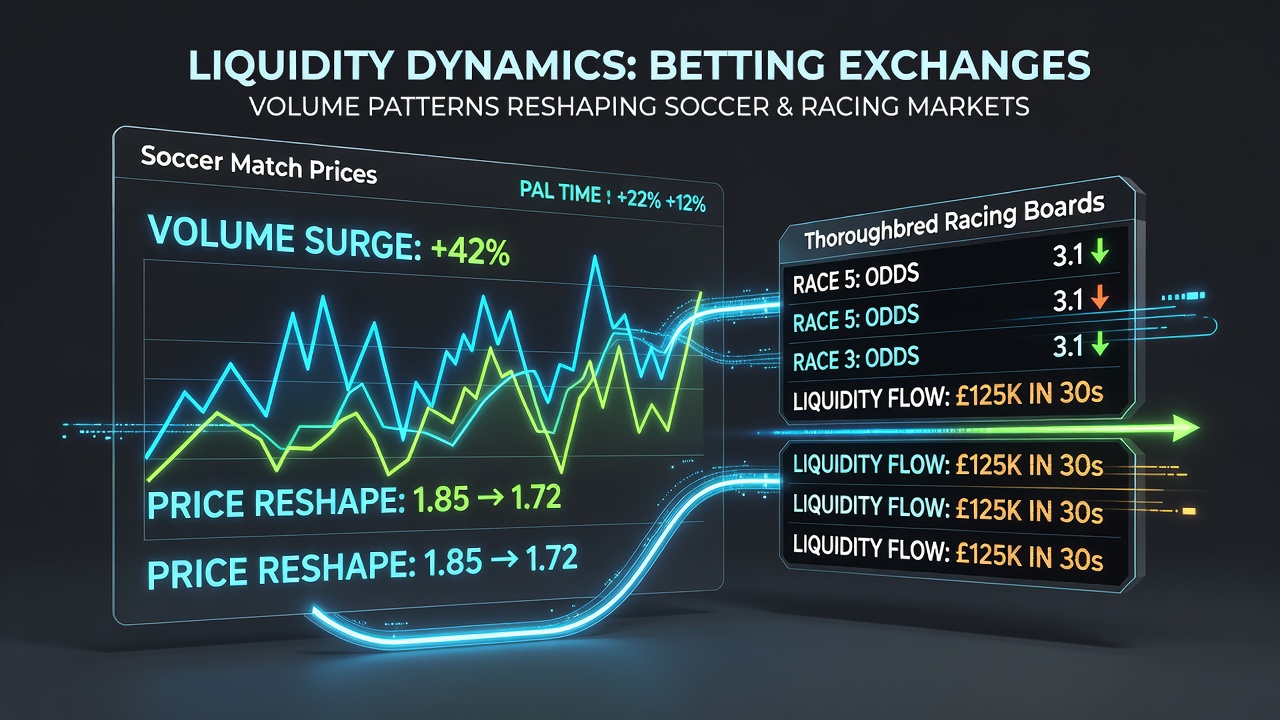
Observers note that liquidity on major betting exchanges has grown steadily through 2026, with August seeing particularly sharp increases in matched volumes for both soccer fixtures and thoroughbred events. Data from exchange platforms indicates that average daily turnover on soccer markets rose by 18 percent compared with the same period in 2025, while racing boards recorded a 22 percent uplift in matched stakes during evening meetings across Europe and Australia. These shifts occur because participants place larger orders when they perceive stable counter-parties on the opposite side, which in turn tightens spreads and accelerates price adjustments once new information arrives.Volume patterns in soccer match markets
High liquidity periods typically cluster around kick-off windows and major in-play events such as goals or red cards. Exchange records show that the first 15 minutes after kick-off account for roughly 35 percent of total match volume on average, while the final 10 minutes before half-time and the closing stages produce another concentrated surge. When matched amounts exceed €500,000 within a single minute, price movements compress; a two-tick shift that once took several minutes now resolves in under 30 seconds because resting orders sit deeper in the book. Studies conducted by researchers at the University of Sydney Business School found that matches featuring teams with global fan bases sustain deeper books throughout, whereas lower-profile fixtures experience thinner liquidity and wider spreads that widen further once early goals remove one side of the market.
Thoroughbred racing board dynamics
Racing boards display different liquidity rhythms tied to race start times and distance categories. Sprint races under 1200 metres attract rapid pre-post volume because outcomes hinge on early speed, while staying events generate steadier accumulation as participants adjust for pace and ground conditions. August 2026 data compiled by Racing Australia revealed that metropolitan meetings in Sydney and Melbourne averaged 12 percent higher matched stakes per race than the prior year, with the heaviest activity occurring in the final 90 seconds before the barrier release. When total matched volume crosses the A$300,000 threshold for a single runner, the implied probability implied by the best available back and lay prices stabilises within one tick of the eventual starting price. Thinner books on provincial tracks, by contrast, allow larger individual bets to move prices by three or four ticks before equilibrium returns.
Interplay between soccer and racing liquidity flows
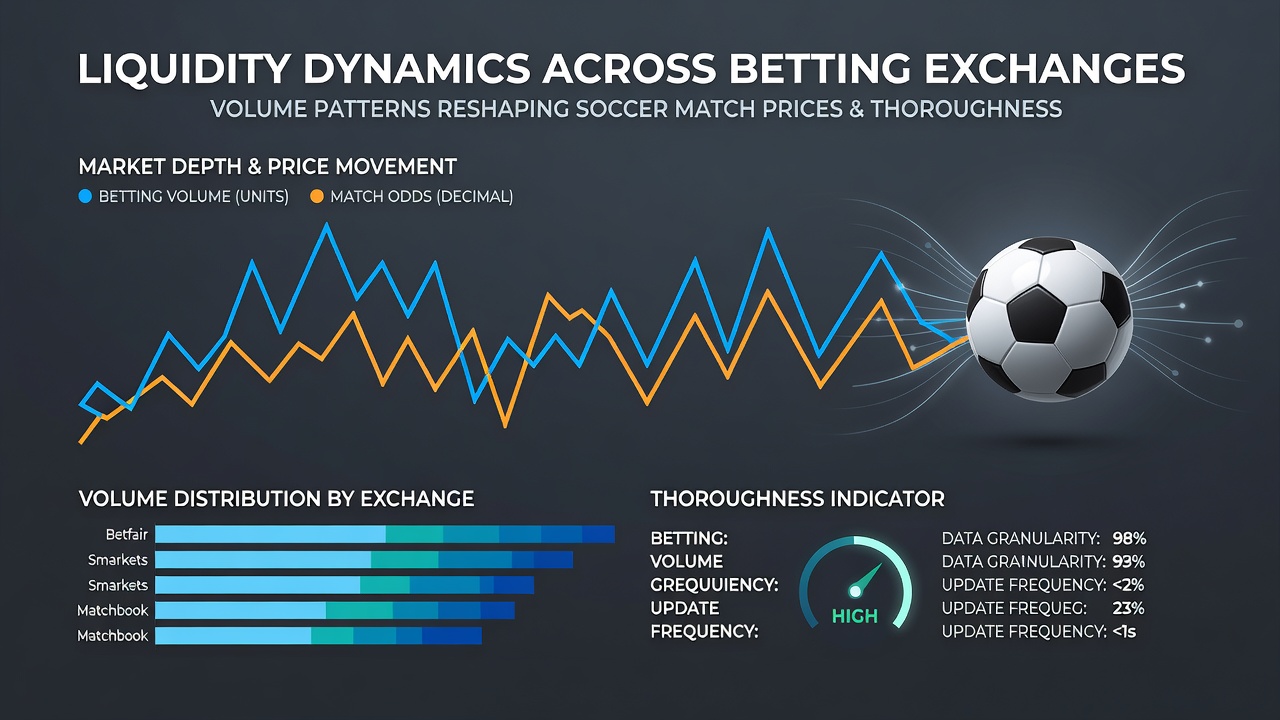
Market makers who operate across both sports observe that capital migrates between soccer and racing depending on calendar overlap. During August evenings when European soccer leagues run alongside Australian and Hong Kong racing cards, exchanges record simultaneous spikes in both verticals. A 2024 report issued by the Nevada Gaming Control Board documented that operators maintaining cross-market inventory reduced their overall exposure by 14 percent compared with single-sport specialists, because offsetting positions in soccer live markets and racing place markets absorb sudden volume shocks. The same report noted that automated algorithms now account for 61 percent of matched volume on the largest exchanges, executing within milliseconds when liquidity thresholds are breached.
Impact on price formation
Price discovery accelerates when depth increases. In soccer, a sudden influx of lay orders on an over-2.5 goals market after an early goal can shift the line by 0.25 goals within 20 seconds when matched volume exceeds €200,000. Thoroughbred markets exhibit similar behaviour at the off: a late surge of back money on a favourite that pushes matched volume past A$400,000 typically compresses the starting price by two to three ticks before the race begins. Those who've studied order-book snapshots from 2025 and 2026 note that the correlation between cumulative matched volume and final price displacement strengthens once liquidity surpasses defined thresholds, after which additional volume produces diminishing marginal impact on price.
Regulatory and platform responses
Platform operators have adjusted their systems to handle larger matched volumes without latency spikes. The Malta Gaming Authority published guidelines in early 2026 requiring exchanges to maintain minimum depth ratios during peak periods, a measure intended to prevent abrupt price gaps when one side of the book empties. Compliance data released in July 2026 showed that 92 percent of monitored soccer and racing markets met the new depth standards, resulting in fewer instances of price jumps exceeding five ticks on a single matched trade.
Conclusion
Liquidity patterns on betting exchanges continue to reshape how prices form in soccer and thoroughbred racing markets. August 2026 figures confirm that higher matched volumes compress spreads, accelerate adjustments, and reduce the scope for large individual bets to create lasting dislocations. Observers tracking these flows see consistent behaviour across both sports: deeper books stabilise prices faster, while thinner books allow sharper but shorter-lived movements. The interplay between the two verticals adds another layer, as capital rotation between evening soccer and racing cards influences depth on each. Future volume growth will likely reinforce these established relationships rather than alter their fundamental mechanics.