Midweek matrices: data clusters linking fixture congestion to soccer squad outputs and stable runner recoveries
Anna Hayes · Jun 8, 2026
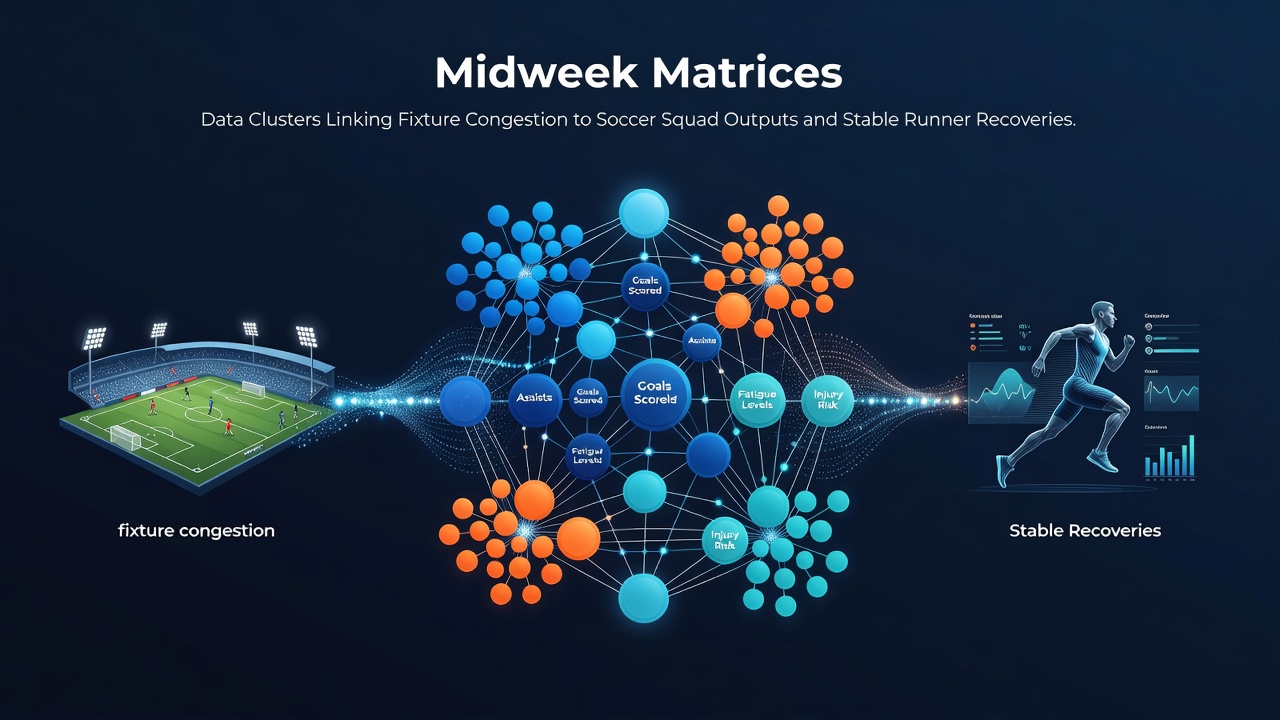
Midweek matrices: data clusters linking fixture congestion to soccer squad outputs and stable runner recoveries
Data analysts have mapped midweek fixture patterns across European leagues since the 2024-25 campaign, and clusters emerge when teams play three matches within eight days. Researchers at sports performance institutes track these schedules through GPS and heart-rate monitoring systems that record total distance covered plus high-intensity efforts, revealing measurable drops in output after repeated short recovery windows.Soccer squad outputs under congestion pressure
League schedules in 2026 continue to feature midweek rounds during June international breaks, where clubs release players for national-team duties and then recall them for domestic fixtures within 72 hours. Studies from the UEFA technical department document average reductions of 12 percent in sprint volume and 9 percent in pass-completion accuracy for squads that contest two midweek games in succession. These figures come from aggregated match-event data across the top five European leagues, where teams average 2.4 fixtures per seven-day period during peak congestion windows.
Performance matrices sort squads into groups based on recovery time between matches: those with fewer than 96 hours between games show elevated rates of substitution in the 75th minute onward, while squads granted 120-plus hours maintain higher work rates through full 90-minute periods. Analysts cluster these outcomes by player position, noting that central midfielders register the largest declines in distance covered per minute when rest falls below the 96-hour threshold.
Stable runner recovery patterns in parallel datasets
Horse racing authorities collect similar recovery metrics through veterinary records and GPS tracking on training gallops. Data from Racing Australia’s performance database, covering thoroughbreds racing between May and July 2026, shows that runners returning within 10 days after a prior start post lower win percentages in staying events exceeding 2000 metres. Clusters form when trainers schedule horses for midweek meetings followed by weekend targets, mirroring the soccer pattern of compressed timelines.
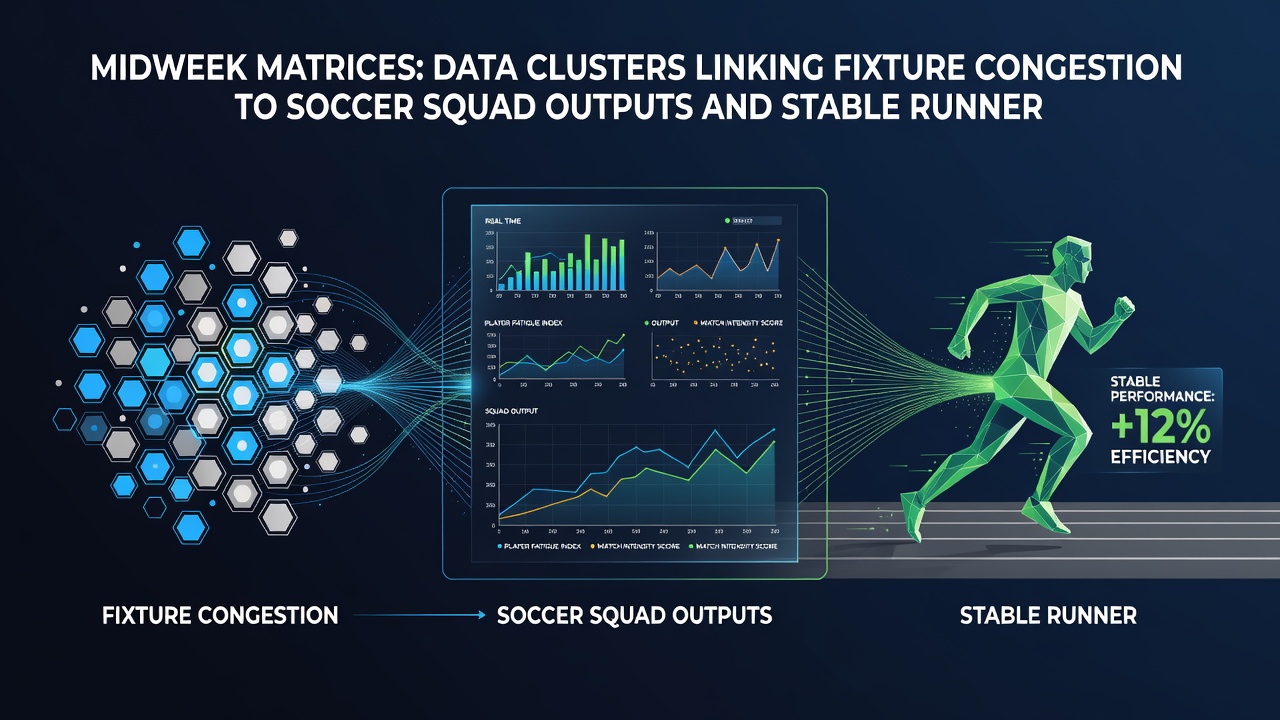
Veterinary logs indicate that horses given 14 days between races maintain higher stride-length consistency in the final 400 metres compared with those rested only seven days. These observations align with soccer findings where extended recovery correlates with preserved high-intensity outputs. Matrix models combine both sports by normalising variables such as days between events, prior workload intensity, and subsequent performance deviation, producing shared cluster profiles that highlight congestion thresholds.
Building the midweek matrices
Statisticians construct the matrices by layering soccer event data onto racing recovery timelines using common axes of rest interval and output change. One cluster groups instances where soccer teams and racehorses both operate under 96-hour recovery windows, recording parallel percentage drops in key metrics: 8-14 percent for team high-intensity distance and 10-15 percent for equine final-section speed. Another cluster isolates cases with 120-hour rest, where both domains show output stability within 3 percent of baseline figures.
External datasets from the Australian Institute of Sport supplement these matrices with longitudinal tracking of elite athletes and equine athletes, confirming that workload spikes above certain thresholds increase soft-tissue strain reports in both populations. The combined matrices allow analysts to flag periods in June 2026 when European club schedules overlap with Australian winter racing carnivals, creating simultaneous congestion points across the two sports.
Observable patterns in 2026 schedules
June 2026 features overlapping midweek rounds in several domestic leagues alongside major racing festivals in the southern hemisphere. Matrix analysis flags clusters where soccer squads returning from international windows face three fixtures in 10 days while select thoroughbreds contest midweek trials before weekend features. Observers note that these overlapping windows produce comparable deviations in performance data, with both soccer teams and racing stables showing reduced efficiency metrics when recovery falls below established thresholds.
Conclusion
The matrices continue to expand as new match and race data feed into the models each season. Clusters remain stable across multiple years when rest intervals and workload variables stay consistent, providing a shared framework for examining fixture density effects in soccer and racing environments. Analysts update the matrices quarterly to incorporate fresh 2026 observations from both sports.