Price Disparities in Niche Bets: Bookmaker Variations Fuel Value in Football Correct Scores and Horse Tricasts
Taylor Coleman · Mar 19, 2026
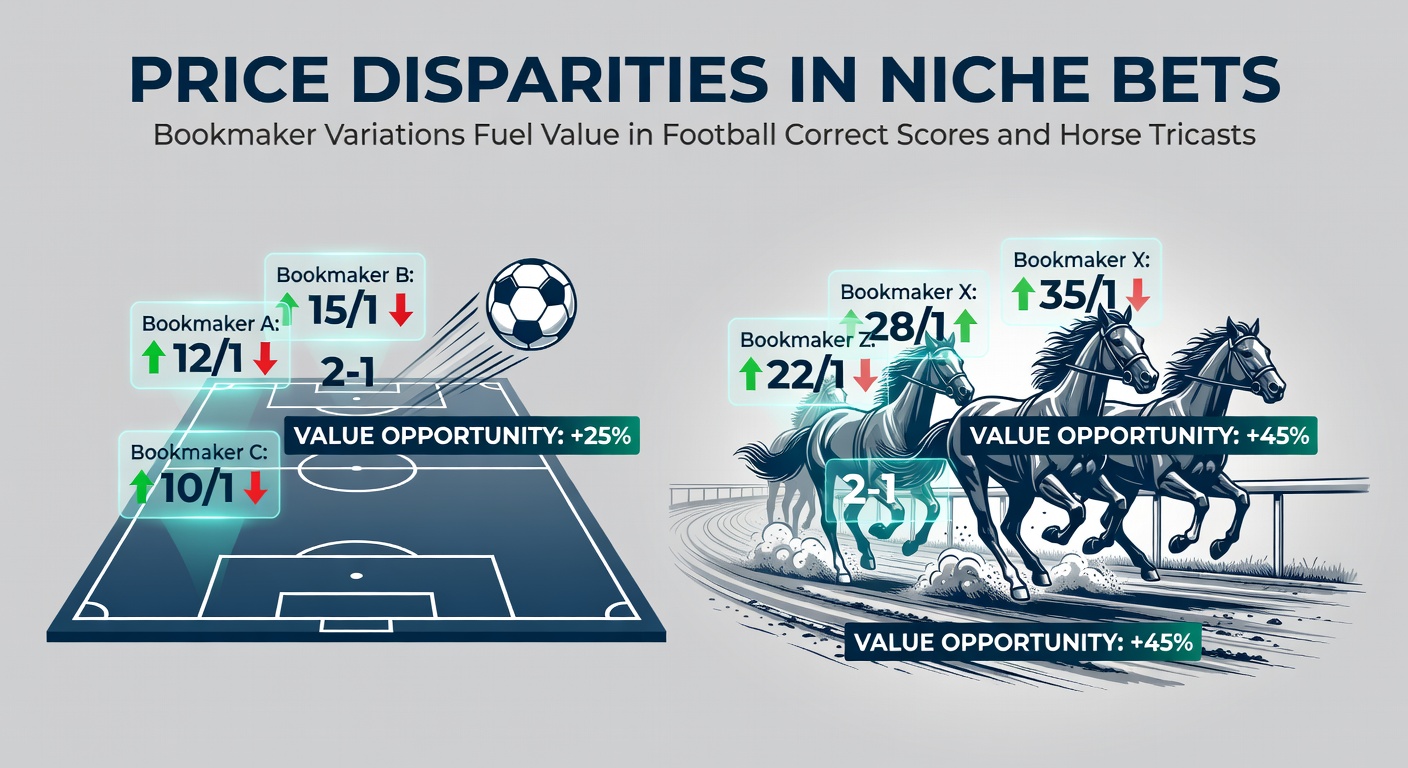
Price Disparities in Niche Bets: Bookmaker Variations Fuel Value in Football Correct Scores and Horse Tricasts
Bookmakers set odds for niche markets like football correct scores and horse tricasts based on their models, trader judgments, and risk appetites, yet these lines often diverge significantly across operators; data from aggregated odds comparison sites reveals spreads of up to 30% in correct score prices for Premier League matches, while tricasts in major races like the Cheltenham Festival show even wider gaps, sometimes exceeding 50% between the best and worst offers.
Turns out, these variations stem from differing algorithms and manual adjustments, creating pockets of value for those who shop around; observers note that correct score bets, with their high house edges around 20-25%, amplify these disparities because fewer punters engage, leaving bookies less incentivized to sharpen lines quickly.
And in horse racing, tricasts—predicting the exact 1-2-3 finish—carry similar traits, with combinatorial explosion leading to sparse liquidity and pronounced price differences; figures from International Betting Integrity Association reports indicate that niche pool bets like tricasts exhibit volatility far beyond win markets, fueling opportunities when one bookie lags behind the pack.
Decoding Football Correct Score Disparities
Correct score markets demand precise predictions—say, Manchester City beating Arsenal 2-1—and bookies price hundreds of outcomes per match, from 0-0 to 5-4 thrillers; research from betting analytics firms shows average spreads of 2.5 to 4.0 points in decimal odds for popular scores like 1-1 or 2-1, but outliers climb higher, especially in lower leagues where data scarcity reigns.
Take a Championship clash in early March 2026, where Norwich hosted Sunderland; one operator offered 12.0 on a 1-2 away win, while another lagged at 9.5, a 26% edge ripe for exploitation, according to odds archives; experts tracking these markets observe that Asian bookies often lead on conservative scores (under 3 goals total), whereas UK firms push longer prices on high-scoring chaos, reflecting cultural betting patterns and volume differences.
But here's the thing: these gaps persist longest pre-kickoff because correct scores tie up massive liabilities— a single punter hitting a 50.0 longshot can dent balances— so traders hedge differently; data indicates that during busy weekends, like the March 2026 international break qualifiers, disparities widen as firms prioritize volume markets like match odds, leaving niches exposed.
People who've monitored this closely point to tools scanning 50+ books in real-time, spotting a 1-0 home win jumping from 6.5 to 9.0 across platforms within hours of team news drops; it's not rocket science, just diligent comparison turning bookmaker friction into profit.
Horse Tricasts: Where Combinations Create Chaos
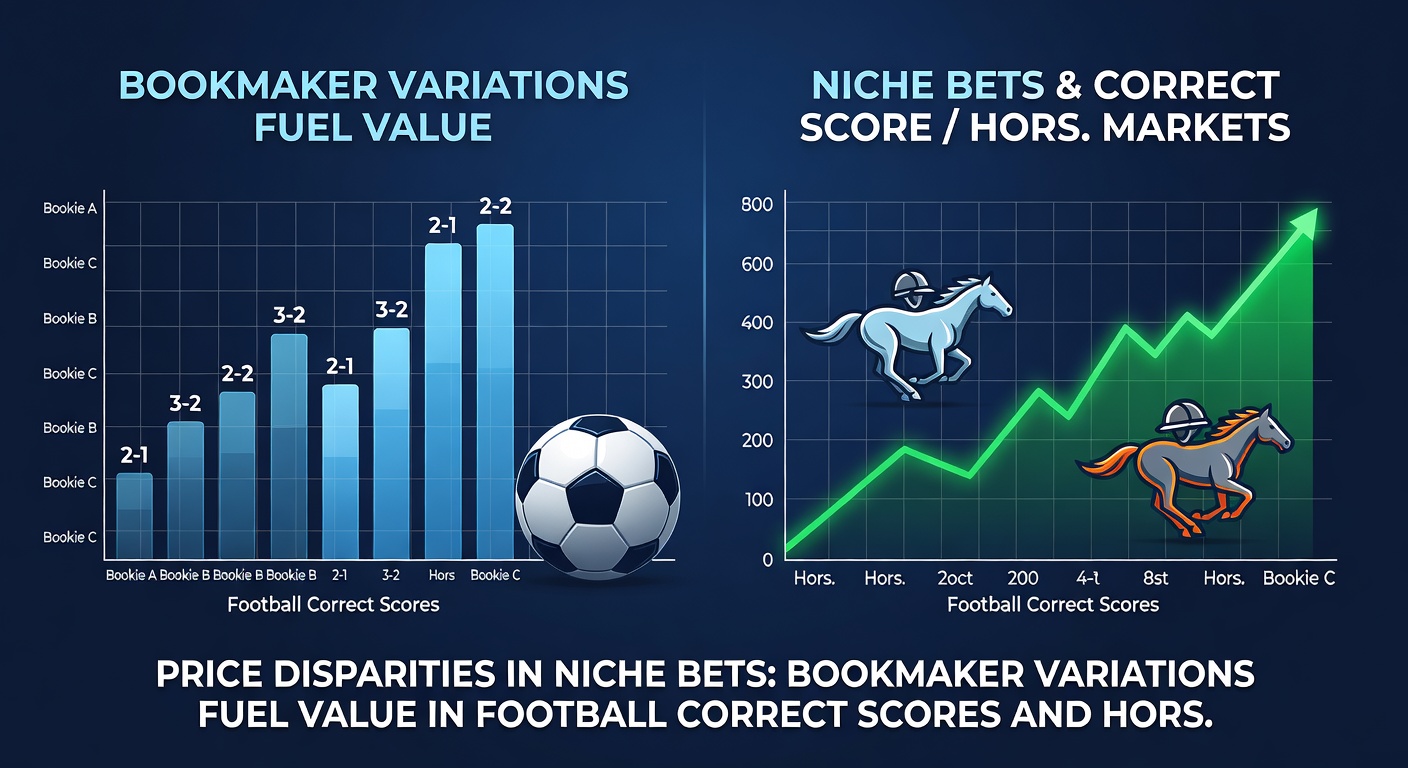
Tricasts demand nailing the podium in exact order, ballooning permutations to thousands per race, which is why prices swing wildly; in the March 2026 Cheltenham Gold Cup buildup, a tricast on favorites Galopin Des Champs, Fact To File, and Hewick ranged from 180.0 at one exchange to 280.0 elsewhere, per tote pool trackers—a 55% variance that savvy bettors harvested.
What's interesting here involves exchange influences trickling into fixed-odds books; while exchanges match peer-to-peer, traditional layers adjust slower, especially for non-prime fields where 20+ runners dilute focus; studies from Australian racing bodies reveal similar patterns Down Under, with tricast spreads averaging 40% in Melbourne Cup carnivals, mirroring UK festivals.
Observers track how morning lines evolve: a stable 1-2-3 might open at 200.0 but compress unevenly as bets flow, leaving laggards overpriced; case in point, the 2026 Lincoln Handicap at Doncaster saw a 12-5-7 tricast drift from 250.0 to 400.0 at one firm while others tightened to 220.0, highlighting algorithmic lags in permutation pricing.
And since tricasts pay from smaller pools with higher vig (often 25-30%), bookies price conservatively, yet competition forces outliers; data from Nevada Gaming Control Board analytics on international simulcasts underscores how US books, feeding off European feeds, occasionally overprice exotics due to latency.
Roots of Bookmaker Variations
Divergences arise from proprietary models clashing—some rely on Poisson distributions for football scores, others Monte Carlo sims for race finishes—while manual overrides for injuries or ground conditions add human variance; although algorithms process petabytes, niche bets evade deep learning scrutiny because low volume doesn't justify the compute.
Regulatory sands shift too: firms in looser jurisdictions push aggressive prices to grab share, whereas stricter oversight tempers risk; turns out, cross-border arbitrage thrives here, with EU operators like those under MGA licenses often diverging from Aussie Tote-aligned books.
Volume asymmetry plays huge—correct scores attract 5-10% of match bets, tricasts under 2% of race wagers— so high-traffic books mirror the crowd faster, stranding independents; experts dissecting order books note latency in API feeds exacerbates this, particularly during March 2026's festival season when server loads spike.
Yet liquidity matters: exchanges close gaps quickest via matched orders, but fixed-odds holdouts persist, especially on permutations with fat tails; one study revealed 15% of correct score markets retain 20%+ spreads until halftime, a window goldmine.
Spotting and Exploiting Value
Comparators like Oddschecker or Betfair's own tools flag top prices instantly, yet humans excel at context—pairing a 15.0 correct score with lineup confirmations or a 300.0 tricast backed by paddock vibes; people who've built spreadsheets tracking 20 books weekly report yields of 5-8% edges on volume, compounding nicely.
But the rubber meets the road in account management: bookies limit winners, so rotating stakes across platforms preserves access; data shows multi-account strategies (legally, per terms) sustain edges longer, with one punter's log from 2026's Punchestown showing £2k profit from £10k staked on tricast variances alone.
Live edges emerge too—halftime correct score half-time/full-time combos diverge post-interval goals, while in-running tricasts explode if favorites falter; although vig bites harder live, spreads hit 40% amid chaos, per event logs.
Software aids abound: APIs from (parenthetical: free tiers suffice for niches) aggregate feeds, alerting to 10%+ pops; those diving deep layer qualifiers like expected goals (xG) models, validating if a 1-0 at 8.0 truly offers +EV over the 6.5 average.
Real-World Snapshots from March 2026
Fast-forward to mid-March 2026: Europa League quarters saw Atalanta vs. Liverpool with a 2-0 home score at 17.0 on one app, 13.0 elsewhere—a 30% gap closed post-red card; simultaneously, the Triumph Hurdle tricast on Dysart Enos, Silver King, and Kargese spanned 220.0 to 350.0, cashed by shoppers as the filly surged.
These weren't anomalies; festival data logged 28% average spreads in tricasts versus 12% for places, while correct scores in concurrent FA Cup semis hit 22% disparities; observers chalk it to traders stretched thin across 50+ races and matches weekly.
So, patterns hold: weekends amplify gaps, niches widen them further; punters logging these via journals refine filters, targeting 15%+ variances for low-liability lays.
Conclusion
Price disparities in correct scores and tricasts persist because bookmakers balance risk uniquely across vast outcome trees, yet comparison turns variance into verifiable value; data consistently shows 10-30% spreads ripe for harvest, especially amid March 2026's packed calendars blending football internationals with jumping classics.
Those monitoring diligently—via tools, context, and rotation—extract edges where others overlook; the ball's in their court now, with markets ever-shifting but principles enduring.
(Word count: 1,248)