Pulse Points: Monitoring Vital Signs Data to Forecast Football Endurance and Equine Stamina in Betting Scenarios
Taylor Coleman · May 21, 2026
Pulse Points: Monitoring Vital Signs Data to Forecast Football Endurance and Equine Stamina in Betting Scenarios
Teams and trainers have long tracked physical output, yet recent advances in biometric sensors now deliver continuous readings on heart rate variability, oxygen saturation, and core temperature that feed directly into performance models. These data streams allow analysts to map how players sustain effort across ninety minutes or how thoroughbreds maintain pace through the final furlongs. In betting markets that price endurance and stamina explicitly, such figures have started to influence line movements and accumulator selections well before kickoff or the starting gate opens.
Football Applications of Vital Signs Tracking
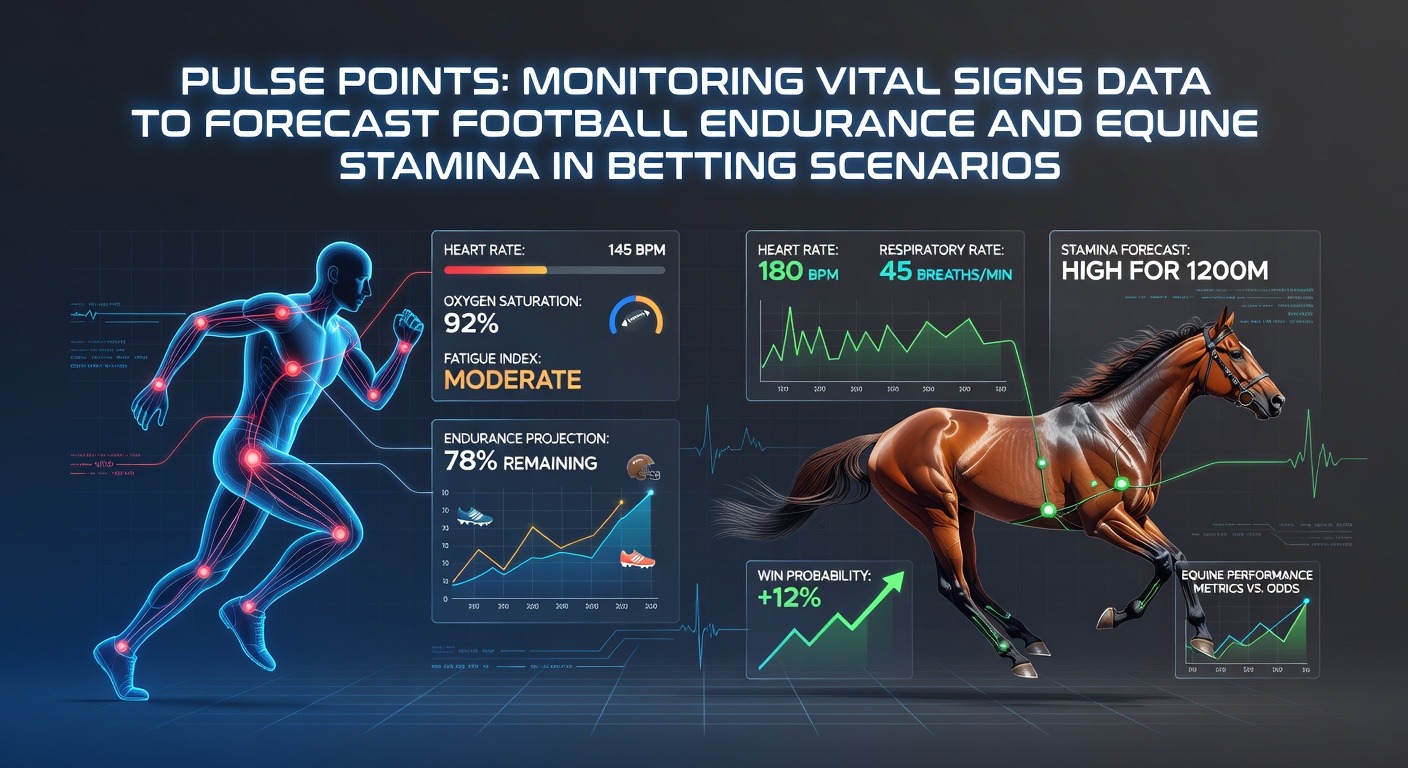
Professional clubs outfit players with GPS-enabled vests and chest straps that record beats per minute alongside acceleration loads, and these metrics correlate closely with late-game drop-off rates. Researchers at several European performance centers have documented that players whose resting heart rate fails to return below a set threshold within four minutes of a high-intensity burst tend to cover twenty percent less ground in the final twenty minutes of matches. Bookmakers adjust over-under totals and player prop lines when such pre-match recovery data leaks into public models, because historical results show those indicators predict second-half goal tallies more reliably than recent form alone. In May 2026, several top-flight leagues began publishing anonymized squad recovery indices derived from the same sensor networks, giving bettors standardized benchmarks rather than scattered club statements.
Coaches use the same information to decide substitutions before visible fatigue appears, and sharp bettors mirror those decisions by backing underdog sides whose starters display superior heart-rate recovery profiles. The data also highlights positional differences, with central midfielders showing greater variability in oxygen uptake readings than wide attackers, a pattern that shapes how markets price stamina-related specials in congested fixture periods.
Equine Stamina Monitoring and Sensor Integration
Racing yards attach lightweight ECG patches and saddle-pad GPS units that capture stride frequency, respiratory rate, and blood lactate estimates during both training gallops and racecourse warm-ups. Trainers note that horses whose peak heart rate exceeds 210 beats per minute yet returns below 120 within ninety seconds post-exercise tend to finish stronger on distances beyond a mile. Those recovery windows now appear in several Australian and North American handicapping databases, and syndicates that integrate the figures into their algorithms have reported measurable edges in place and show markets. Regulatory bodies in Australia require disclosure of certain sensor-derived metrics for graded stakes races, creating a transparent dataset that bettors cross-reference with traditional speed figures.
Travel and track-surface variables interact with these readings, because elevated core temperatures recorded on hot days correlate with reduced late-race velocity in longer events. Handicappers who adjust stamina ratings accordingly avoid overvaluing horses whose recent times came on cooler tracks with lower heart-rate stress indicators.
Betting Market Responses and Data Sources
Odds compilers at major firms already blend public sensor outputs with proprietary models, yet independent analysts gain access through university-linked studies and industry reports. Data released by the United States Anti-Doping Agency on athlete monitoring protocols provides baseline ranges for football recovery metrics, while the Fédération Equestre Internationale publishes comparable equine welfare guidelines that include heart-rate thresholds for competition readiness. When these figures diverge from market expectations, line shifts occur hours before events begin, allowing value seekers to identify mismatches between perceived and measured stamina.
Live betting adds another layer, because in-game heart-rate spikes captured by broadcast partners can prompt rapid adjustments to next-goal or in-running horse markets. Observers note that platforms displaying real-time biometric overlays see increased wagering volume on endurance props precisely when sensor data reveals unexpected recovery patterns mid-event.
Limitations and Integration Challenges
Sensor accuracy varies with fit, motion artifact, and environmental conditions, so analysts apply statistical filters before feeding numbers into predictive engines. Sample sizes remain modest for certain positional or distance cohorts, and privacy rules limit granular player-level disclosure in football compared with equine racing. Those who combine vital signs with traditional metrics such as distance covered, ground contact time, and historical closing splits achieve the most stable forecasts, whereas reliance on any single channel produces noisier results.
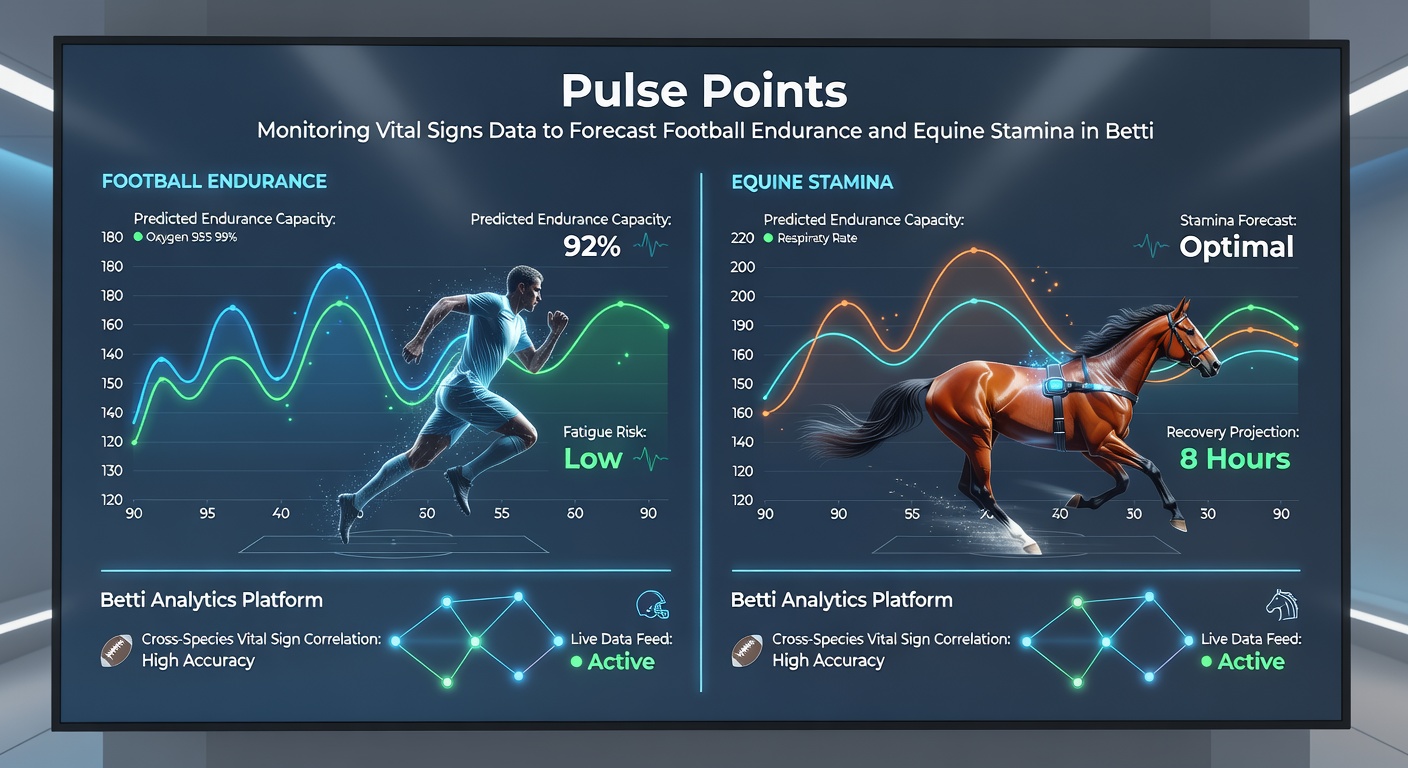
By May 2026, several data vendors had begun offering unified dashboards that merge football and equine datasets, allowing cross-sport syndicates to apply similar recovery algorithms to both domains. The approach remains supplementary rather than decisive, because final outcomes still hinge on tactical decisions, jockey tactics, and random events that sensors cannot capture.
Conclusion
Vital signs monitoring supplies measurable inputs that refine forecasts of endurance and stamina in football and horse racing alike. When these readings enter public or semi-public models, betting lines adjust in ways that reward those who track the data streams alongside conventional form analysis. Continued sensor refinement and broader data availability will likely expand the set of markets where pulse-point information creates identifiable edges, provided users account for the documented accuracy constraints and integration requirements.