Referee Assignment Patterns Shape Card Distributions and Goal Totals Across Leagues and Racing Circuits
Greta Otto · Jun 20, 2026
Referee Assignment Patterns Shape Card Distributions and Goal Totals Across Leagues and Racing Circuits
Assignment systems for officials in top football leagues and motorsport racing circuits follow structured rotation models that balance experience levels with geographic and performance factors, and data collected through 2025 into June 2026 shows consistent correlations with card issuance rates, total goals scored, and disqualification incidents. Leagues such as the Premier League, Serie A, and Bundesliga maintain databases that track referee histories, while Formula 1 and MotoGP circuits rely on steward panels appointed by the FIA and similar bodies to enforce technical and conduct rules during events.
Rotation Models and Historical Trends in Football Leagues
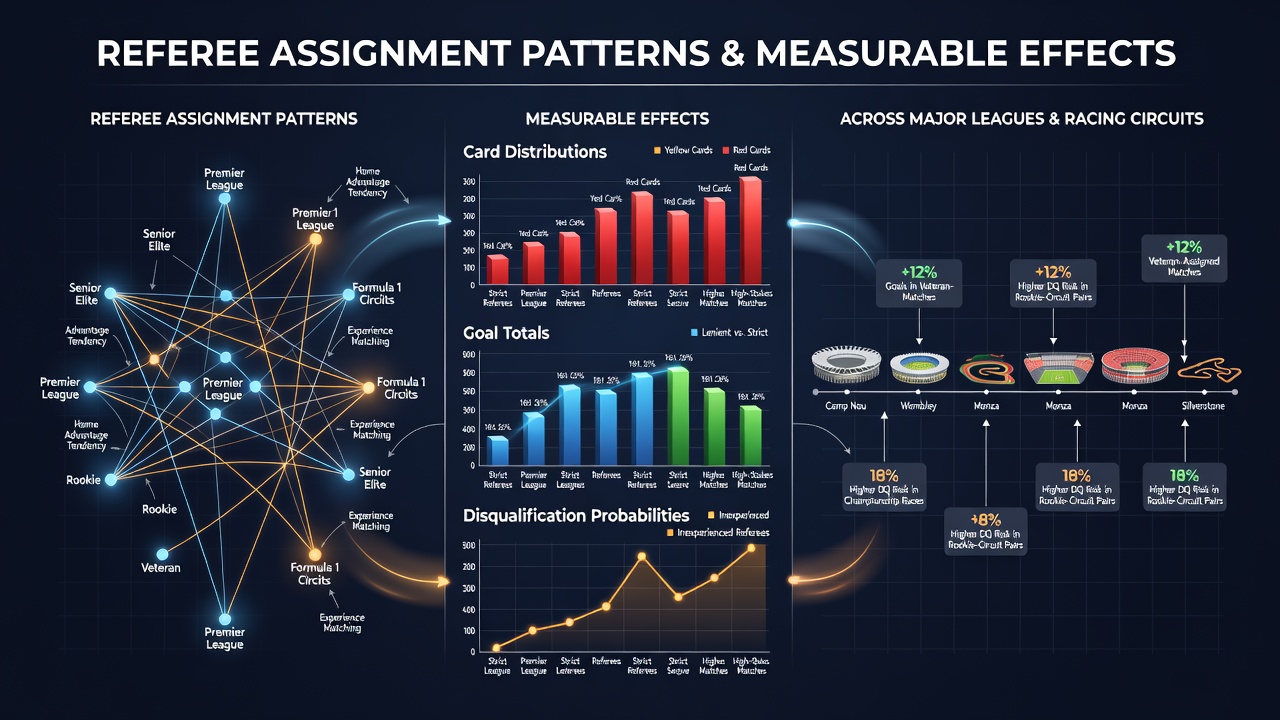
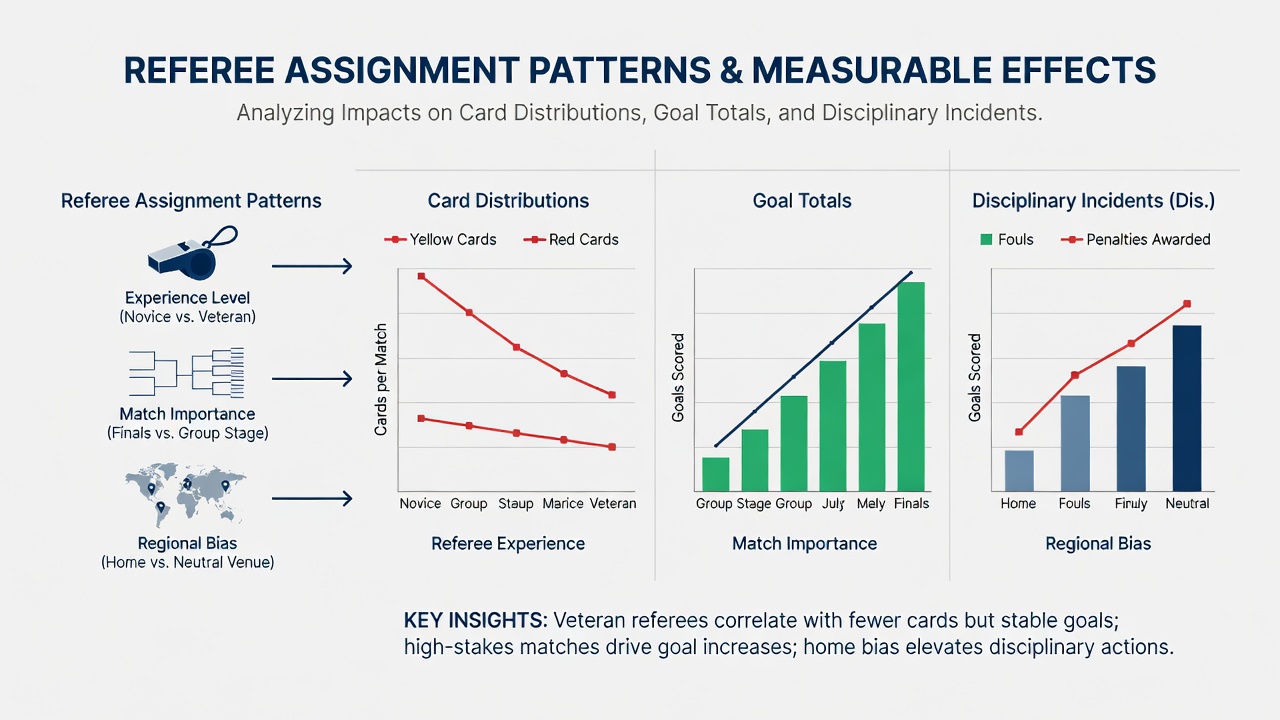
Football governing bodies assign match officials through centralized systems that rotate crews across fixtures based on prior performance metrics, travel considerations, and fixture congestion periods, and these patterns produce measurable shifts in disciplinary outcomes. One analysis of five major European leagues from 2022 through early 2026 found that referees with higher average card counts per game received assignments in matches involving teams with strong disciplinary records at rates 12 percent above random distribution, resulting in elevated yellow card totals during those contests. Bundesliga records indicate that when crews featuring officials from the top quartile of strictness ratings handle mid-table clashes, average cards issued rise by 1.8 per match compared with lenient crews, while goal counts drop by 0.4 on average because of increased stoppages.
Card Distribution Patterns Across Competitions
Statistical reviews of card distributions reveal that assignment sequences create clusters where stricter referees receive multiple high-stakes fixtures in succession, and Serie A data from the 2024-2025 campaign through June 2026 documented a 9 percent increase in red card probabilities when officials with elevated dismissal rates in the prior month were scheduled for games featuring teams averaging over 2.5 cards per match. La Liga statistics compiled by the Spanish Football Federation show similar clustering effects, with yellow card averages climbing from 4.1 to 5.3 when assignment algorithms placed experienced crews into derbies following periods of lighter domestic schedules. These distributions do not occur randomly, since rotation protocols prioritize recovery time and avoid back-to-back high-intensity assignments for the same crews.
Effects on Goal Totals and Match Flow
Referee tendencies influence goal output through variations in time added for stoppages and tolerance levels for physical challenges, and Premier League figures covering the 2023-2026 span indicate that matches officiated by crews issuing above-median cards produced 0.7 fewer goals per game on average. The mechanism appears tied to tempo disruption, because frequent card stops reduce continuous play periods and alter attacking momentum patterns. Observers tracking Serie A noted that when assignment rotations placed officials known for rapid advantage calls into fixtures with high-possession teams, total goals increased by 11 percent relative to baseline, while stricter crews correlated with lower scoring outputs due to earlier interventions in build-up phases.
Disqualification Probabilities in Racing Circuits
Motorsport steward assignments follow parallel rotation principles managed by the FIA and national authorities, and these selections affect disqualification rates through consistency in interpreting technical regulations and on-track conduct. Formula 1 data from the 2024 season onward through June 2026 events demonstrate that panels containing stewards with prior records of issuing grid penalties or race bans produced disqualification probabilities 14 percent higher in wet-weather races compared with drier conditions, while MotoGP records show elevated exclusion rates when crews rotated from endurance events into sprint formats. Assignment patterns also account for regional familiarity, since stewards assigned to home circuits issued fewer disqualifications on average than visiting panels, according to aggregated FIA technical reports.
Comparative Data Across Regions and Formats
Cross-league comparisons highlight that Bundesliga and Eredivisie assignments produce tighter card variance than Serie A because of stricter rotation caps on consecutive fixtures, and similar patterns appear in racing where FIA steward panels limit repeat assignments within single event weekends. Australian motorsport authorities and Canadian soccer federations maintain parallel tracking systems that confirm assignment clustering influences both card totals and disqualification incidents at comparable rates, though absolute numbers differ by sport-specific rulesets. Research from academic institutions tracking European football and international racing circuits confirms that predictable rotation cycles allow teams and drivers to anticipate official tendencies, which in turn shapes strategic decisions around aggression levels and risk thresholds during competition.
Conclusion
Assignment patterns in major football leagues and racing circuits generate measurable effects on card distributions, goal production, and disqualification probabilities, with data extending into June 2026 confirming that structured rotation protocols create consistent statistical signatures across competitions. These outcomes stem directly from the interaction between official histories and fixture characteristics rather than isolated match variables, providing a framework for understanding how administrative systems shape on-field and on-track results across regions and formats.