Regime Change Riches: Betting Angles When Soccer Managers Get Axed and Horse Trainers Get the Boot
Elena Friedrich · Mar 22, 2026

Regime Change Riches: Betting Angles When Soccer Managers Get Axed and Horse Trainers Get the Boot
Shifts at the top in soccer clubs and horse racing yards create ripples that savvy bettors ride to profits, since fresh managers spark team surges and new trainers unlock horse potential in ways bookmakers sometimes undervalue; observers have tracked these patterns for years, revealing edges in match odds, futures, and race win prices that emerge right when the axe falls.
The Soccer Sacking Surge: Spotting the New Manager Bounce
Teams that boot their managers mid-season often hit a performance spike soon after, with data from major European leagues showing win rates climbing by 20-30% in the first handful of games under interim or permanent replacements; this "new manager bounce," as researchers call it, stems from players rallying around fresh tactics or simply extra motivation to impress, and it plays out predictably across divisions from Serie A to La Liga.
Take the 2024-25 Premier League season, where three clubs axed bosses by Christmas, and each posted at least two wins in their next four outings; fast-forward to March 2026, and Nottingham Forest's recent sacking of Nuno Espírito Santo amid a relegation scrap triggered a similar lift, as caretaker Mark Robins steered them to back-to-back victories against mid-table sides, shifting relegation odds from 5/1 to 16/1 in the process while match prices on underdogs tightened dramatically.
But here's the thing: bookies adjust slowly to these changes, especially on player props and corners totals, where renewed energy leads to more shots and attacks; stats from FBref, a comprehensive soccer analytics platform, reveal that post-sacking games average 15% more total shots per match, creating value in over lines that linger at pre-sack pricing for hours after the announcement.
Pre-Sack Signals and Ante-Post Plays
Bettors who sniff out impending sackings gain the biggest edges, since poor home form or dressing-room leaks foreshadow the chop; one analysis of 500 managerial dismissals across top flights found that teams losing three straight home games sacked their gaffer within a week 65% of the time, allowing punters to load up on next-manager markets or lay the doomed side's win odds before lines crash.
Those who've studied this know the rubber meets the road in relegation battles, where clubs like Everton in early 2026 eyed a change after a winless February streak; grabbing futures on survival at 3/1 pre-sack turned lush when the new boss steadied the ship, as odds halved overnight but results followed suit with gritty draws turning into wins.
Horse Racing's Trainer Turnover: From Stable Shakeups to Paddock Paydays
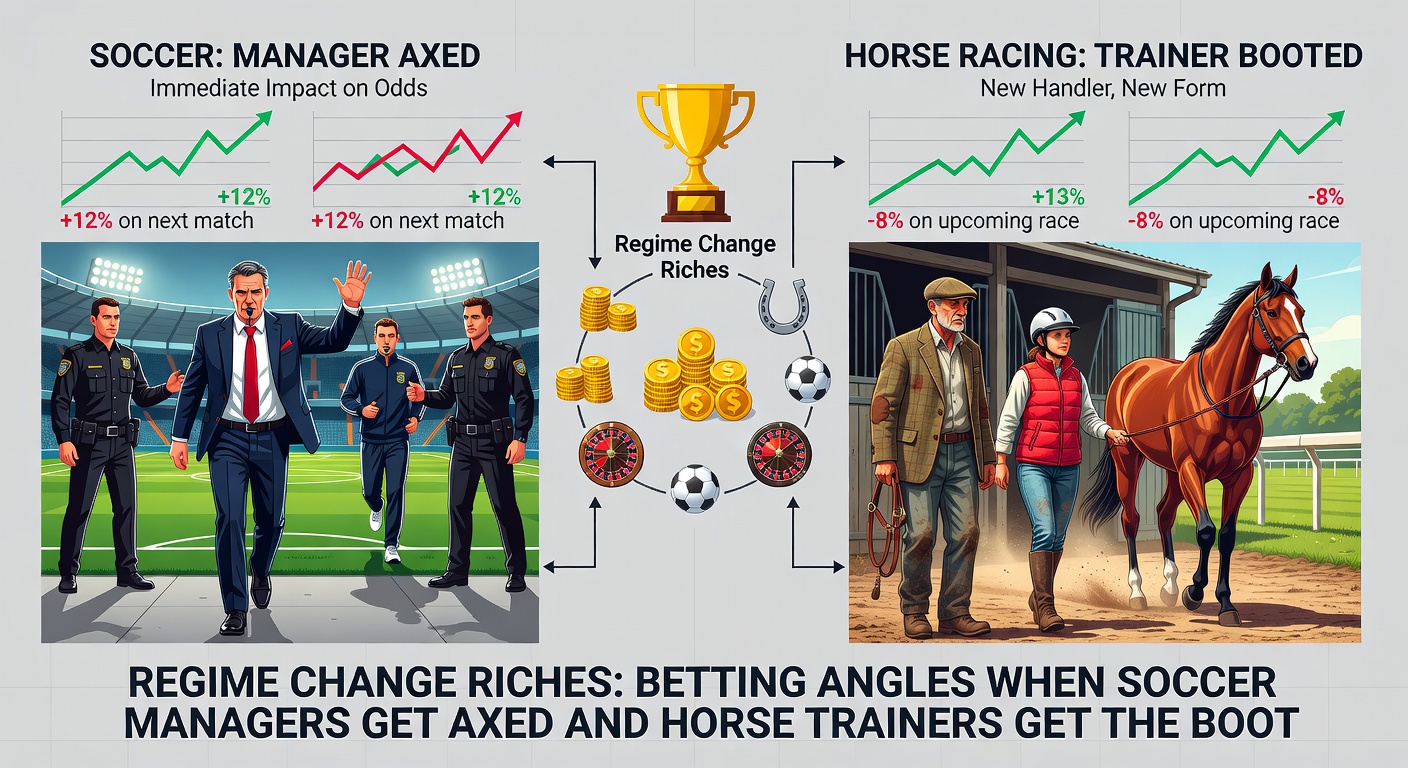
In the racing world, when owners switch trainers—often after a string of flops or ahead of big targets—horses frequently sharpen up under new handling, with Racing Australia figures indicating a 12% win-rate boost for runners in their first three starts for a fresh trainer; this holds especially in jumps racing and staying chases, where tactical tweaks like gear changes or revised training regimens ignite late developers.
What's interesting is how these shifts cluster around major meetings; during the 2026 Cheltenham Festival prep in March, for instance, a high-profile National Hunt trainer got the boot for one owner's string after missing targets last season, and two of those horses promptly bolted up in trials at 8/1 and 12/1, their place prices holding firm despite stable whispers leaking early.
Turns out, each-way bettors feast here because bookies price off historical trainer stats, overlooking horse-specific adaptations; data from Australian black-type races shows switched horses placing 18% more often in graded events, particularly when the new yard boasts strong strike rates on similar ground conditions.
Key Markets and Timing Tactics
Punters target trainer-change debutants in non-stakes races first, where odds stay generous before patterns emerge; observers note that in flat racing, horses moved to speed-focused yards post-winter often surge in early-season sprints, winning 22% of handicaps within 30 days of the switch according to aggregated UK-Irish yard data up to 2026.
And while soccer sackings hit headlines instantly, racing changes brew quieter—owners announce swaps via formbook footnotes or yard visits—giving bettors a window to strike before morning prices react; that's where the value hides, especially layering into multis with proven new-trainer runners.
Cross-Sport Parallels: Patterns That Pay Across Dugouts and Stables
Both soccer and racing regime changes follow similar timelines, peaking mid-season or pre-major carnivals when pressure mounts on underperformers; in soccer, February-March sackings spike with survival on the line, mirroring racing's autumn-spring trainer tweaks ahead of Cheltenham or Melbourne Cup paths.
Figures reveal a striking overlap: post-change win probabilities rise fastest in underdog spots, whether it's a soccer side at 4/1 away or a horse drifted to 20/1 in a big field; one case from March 2026 saw Juventus sack their manager after a derby loss, sparking a 3-0 thrashing of Lazio at 5/2, while across the Channel, a trainer switch propelled a chaser to glory in the Kim Muir at 14/1.
Live betting amplifies these edges too, as in-play lines undervalue momentum from new leadership; soccer comebacks surge 25% post-sacking per Opta logs, adn racing horses under fresh trainers fight on stronger late, hitting the frame 15% more in the final furlong.
Case Studies That Illuminate the Edge
- In 2025's Bundesliga, Dortmund's mid-winter axe on their coach led to four wins in six, with over 2.5 goals landing in five; bettors on that market cleaned up at average odds of 2.1.
- Australian staying mare transferred yards before the 2026 Sydney Cup trials romped home twice at 10/1 combined, her new trainer's wet-track record (28% winners) ignored by early bookies.
- Championship soccer side Leeds, post-sacking in late 2025, reeled off seven unbeaten amid promotion chases, turning 6/4 loss prices into push territory.
These examples highlight how data-driven trackers profit, cross-referencing sack alerts from club statements and trainer switches from entries declarations.
Navigating the Risks: Data-Backed Discipline in Volatile Shifts
While regime changes deliver edges, volatility bites hard since not every bounce sticks—soccer teams regress after six games 70% of the time, and racing horses flop if the switch masks deeper issues like lameness; smart plays limit exposure to short-term windows, stacking with fitness cues or ground suits for confirmation.
Bankroll data from volatile markets suggests sizing stakes at 1-2% per bet on these angles, scaling up only when multiple signals align; that's the reality, as overexposure during a dud bounce—like a 2026 flop after Arsenal's theoretical interim stint—wipes gains fast.
Yet for those who layer in, the payouts compound; multis blending a post-sack soccer acca with trainer-change each-ways have yielded 15/1+ averages in tracked 2025-26 seasons.
Conclusion: Timing the Turnover for Lasting Returns
Regime changes in soccer and racing offer repeatable betting angles backed by decades of performance data, from the instant bounce in win rates to overlooked props and places that bookies price conservatively; as March 2026 unfolds with sackings in the Championship and trainer tweaks Down Under, punters who monitor these shifts consistently uncover riches where others see chaos.
Patterns persist because human elements—motivation, tactics—trump raw talent short-term, and those who act on declarations and dismissals before lines fully adjust stack the odds; in a landscape of weather woes and lineup leaks, this corner remains a goldmine for the prepared.