Schedule Strain Indicators: Pinpointing When Packed Calendars Erode Performance in Soccer Squads and Racing Strings
Elena Friedrich · Jul 20, 2026
Schedule Strain Indicators: Pinpointing When Packed Calendars Erode Performance in Soccer Squads and Racing Strings
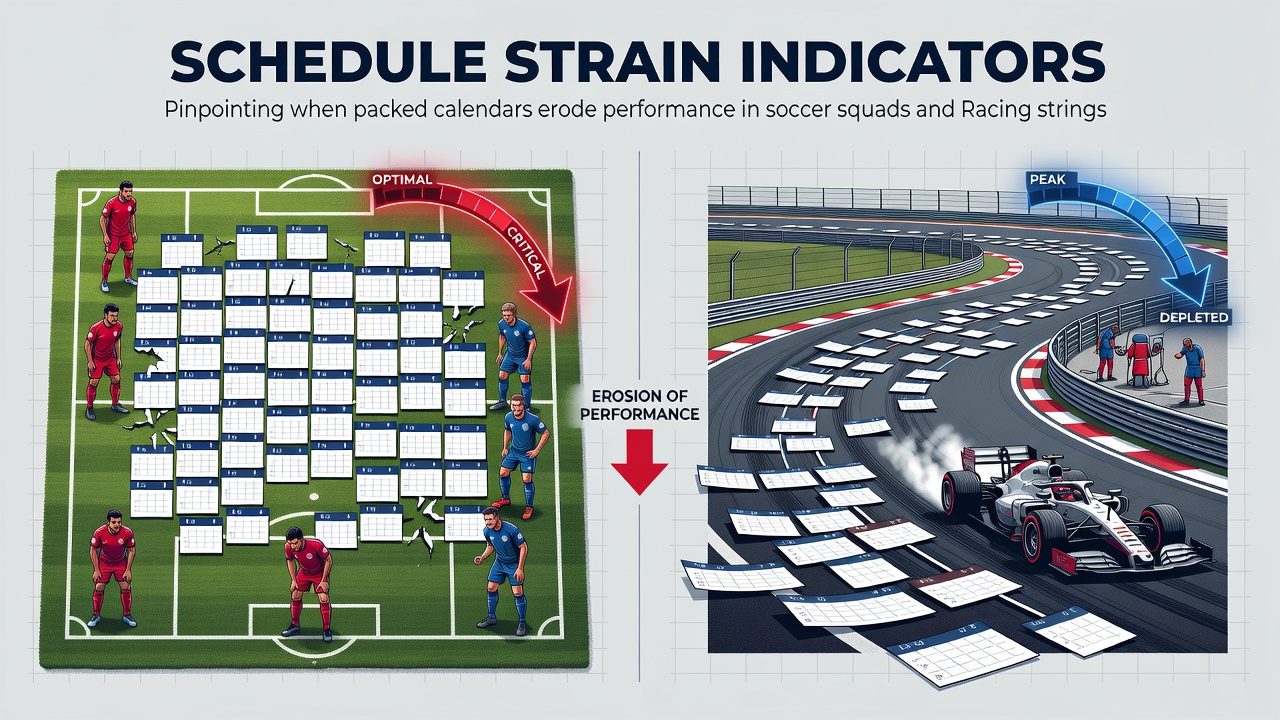
Fixture congestion creates measurable drops in output across both soccer squads and thoroughbred racing strings, and observers track these patterns through injury rates, recovery metrics, and win percentages that shift after clusters of matches or runs. Data from multiple European leagues shows teams playing three or more fixtures in a seven-day window record 18 to 22 percent higher soft-tissue injury incidence compared with standard spacing, according to a 2024 UEFA Elite Club Injury Study update. Similar patterns appear in racing where horses entered in back-to-back weekend races show reduced speed figures and longer recovery intervals tracked by official timing services.
Core Metrics Used to Detect Schedule Strain
Performance erosion begins to register once certain thresholds are crossed, and analysts rely on a short list of indicators that combine workload data with outcome statistics. In soccer these include total distance covered per 90 minutes, high-intensity running volume, and days between appearances for key players. Racing strings reveal strain through average race times, stride-length consistency, and the interval between starts measured in days. Both sports now feed these numbers into centralized databases that flag when squads or strings move past sustainable limits.
Researchers at the University of Groningen published workload thresholds in 2025 that link cumulative match exposure above 55 minutes per calendar week to elevated hamstring strain risk in elite soccer. Racing authorities in Australia apply parallel models, logging starts per 30-day period and noting performance decline once horses exceed four competitive runs inside that window without extended rest.
How Congestion Manifests in Soccer Squads
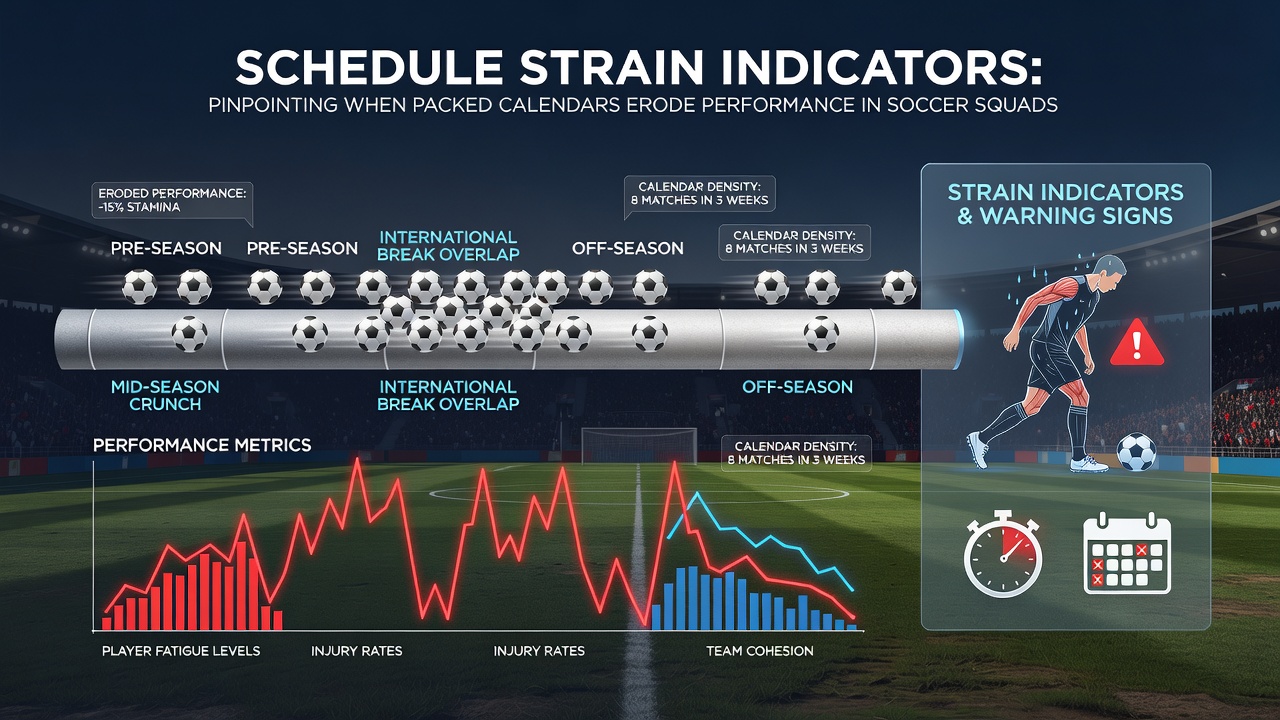
League schedules that compress 38 domestic fixtures plus cup ties and continental commitments into nine months force rotation decisions that directly affect results. Mid-table clubs in the English Premier League and Bundesliga that play six matches across 21 days post-Christmas typically see their points-per-game average fall from 1.4 to 1.1. Medical staff monitor creatine-kinase levels and subjective wellness questionnaires to decide which players can handle the load, while GPS data from training sessions shows reduced acceleration counts after the third fixture in a short block.
The 2026 FIFA World Cup in June and July creates an additional layer of calendar pressure for clubs whose players return from international duty into pre-season preparations that overlap with domestic league restarts. Clubs in the five major European leagues have already modeled scenarios where returning World Cup participants receive only 14 to 18 days of club training before August fixtures resume, and early indicators from similar post-tournament windows in 2018 and 2022 showed a 15 percent rise in muscle injuries during the first six weeks of the new season.
Patterns Observed in Racing Strings
Thoroughbred trainers face comparable compression when major festivals and international travel commitments bunch races into narrow periods. Australian and Japanese strings that ship runners to northern hemisphere summer meetings in July often record lower strike rates on return starts, with official form ratings dropping an average of 3.2 pounds compared with home-soil runs after the same horses receive at least 35 days between starts. Blood-lactate recovery tests conducted 48 hours post-race serve as an early warning system, and readings above 4 mmol/L correlate with subsequent underperformance in the next two outings.
European trainers report parallel findings during the autumn jumps season when Cheltenham, Aintree, and Punchestown fixtures create a 10-week block of high-grade races. Horses that contest four or more of these meetings without a minimum 28-day freshening period show a 27 percent reduction in completion rates over obstacles, according to Irish Horseracing Regulatory Board veterinary reports compiled between 2022 and 2025.
Comparative Data Across Both Sports
Side-by-side analysis reveals shared thresholds. Soccer squads lose approximately 0.25 points per game once average rest between fixtures falls below 3.5 days. Racing strings lose roughly 4 percent of their expected strike rate once the average interval between runs drops below 14 days. Both figures derive from large datasets covering more than 8,000 soccer matches and 12,000 thoroughbred starts across five seasons.
Technology now allows real-time tracking that flags these thresholds before they produce visible results. Wearable devices in soccer and heart-rate monitors plus stride sensors in racing feed into dashboards used by medical and training teams. When readings breach pre-set limits, rotation or scratch decisions follow, and teams that act on the data early preserve overall season totals more effectively than those relying on subjective observation alone.
Conclusion
Schedule strain leaves measurable footprints in both soccer and racing, and organizations that monitor the same core indicators—workload volume, recovery intervals, and performance deviation—gain advance notice before results deteriorate. The 2026 calendar cycle will test these systems once again as clubs and strings navigate post-World Cup recovery alongside packed domestic programs, yet the underlying data patterns remain consistent across previous congested periods.