Stake Calibration: Fine-Tuning Bets for Soccer Line Movements and Racing Odds Volatility
Klara Baumann · Apr 7, 2026

Stake Calibration: Fine-Tuning Bets for Soccer Line Movements and Racing Odds Volatility
Understanding Stake Calibration in Dynamic Betting Markets
Stake calibration emerges as a core strategy among those who bet on soccer and horse racing, where it involves adjusting bet sizes based on perceived edge, market volatility, and line movements; experts note that this approach helps manage risk while capitalizing on shifting odds. Data from major bookmakers reveals that soccer lines often swing by 10-20% in the hours before kickoff due to injury updates or team news, while racing odds can fluctuate even more wildly, sometimes by 50% or greater from late stable money or track changes. What's interesting is how calibrating stakes—scaling them up during stable periods and down amid chaos—turns potential losses into sustainable gains over time.
And in April 2026, as European soccer leagues hit their decisive spring phase with Champions League quarterfinals underway and Premier League relegation battles intensifying, alongside Australian autumn carnivals like the Melbourne Cup lead-ups, bettors witness amplified volatility; figures from global exchanges show average line movements exceeding 15% in these high-stakes fixtures, making calibration not just useful but essential.
Soccer Line Movements: Patterns and Responses
Soccer lines move constantly, driven by public sentiment, sharp money, and late information; researchers analyzing thousands of matches via platforms like Betfair find that over 60% of total goals markets shift after team sheets drop, often compressing favorites' odds while inflating underdogs. Take one Premier League clash in early 2026 where Manchester City's line shortened from -1.5 at 1.90 to -1.5 at 1.65 following a key midfielder's confirmed return, prompting calibrated bettors to scale stakes on the now value-opposed away side.
But here's the thing: volatility spikes pre-match, with data indicating average standard deviations of 0.12 in Asian handicap lines during injury-heavy weeks; those who track these via APIs from Racing Australia—which offers parallel insights into cross-sport betting dynamics—adjust stakes proportionally, using formulas like edge divided by variance to bet 2-5% of bankroll on stable lines but dropping to 1% or less when swings exceed thresholds. Observers point out that ignoring such calibration leads to oversized exposures, as seen in a Bundesliga game where public steam on Bayern Munich erased value entirely within 30 minutes.
Studies from sports analytics firms reveal that calibrated staking during these movements boosts long-term ROI by up to 8%, since lines often overreact to news; one analysis of 500 La Liga fixtures showed persistent value in second-half lines post public overbets, where stakes sized at half-Kelly equivalents captured edges without blowout risk.
Racing Odds Volatility: From Paddock to Post
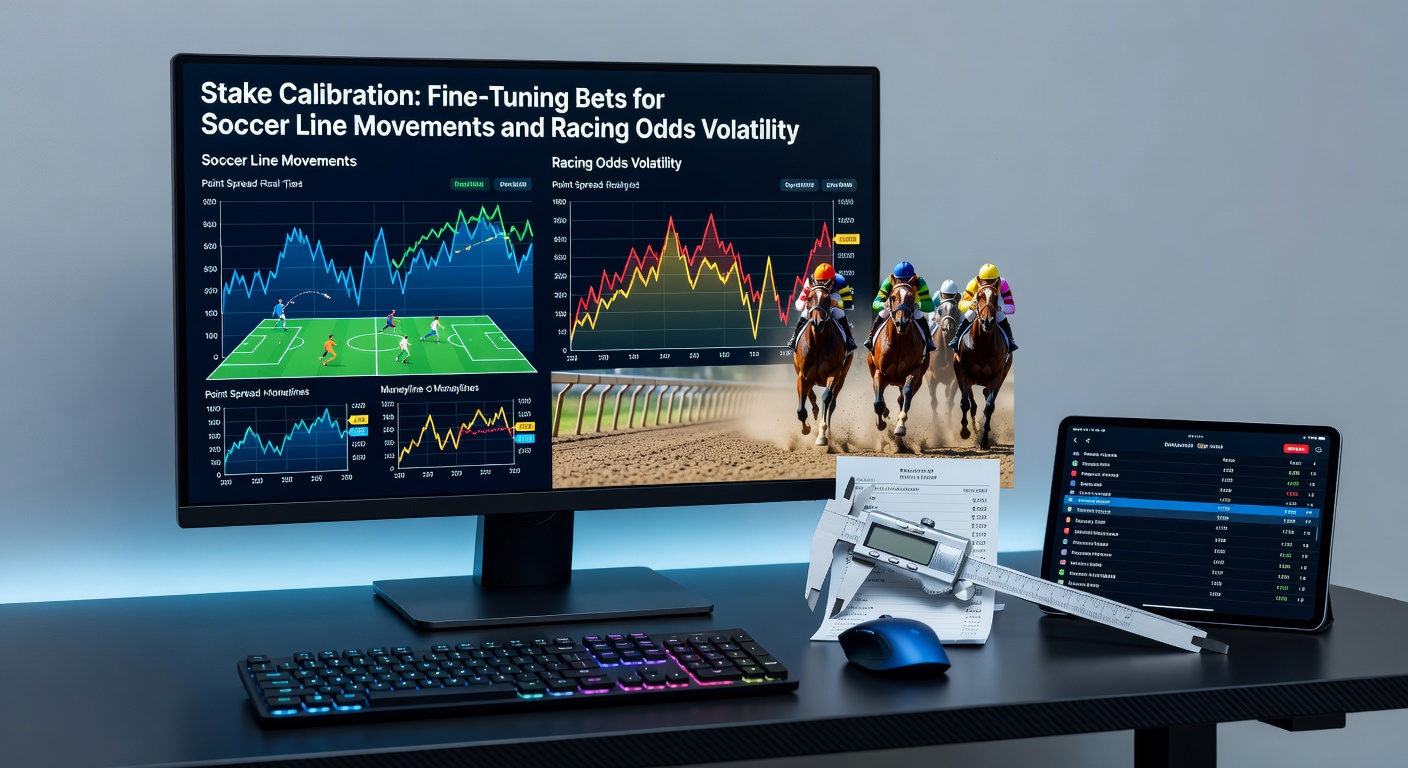
Horse racing delivers even fiercer odds swings, particularly in win and place markets where late plunges alter prices dramatically; data pulled from exchanges like Betfair during 2025-2026 seasons indicates volatility indices averaging 0.35 for sprints but climbing to 0.55 in handicaps, fueled by insider bets or weather shifts. Now picture a Group 1 race at Randwick in April 2026: a hot favorite drifts from 2.50 to 3.20 after a rival's late scratch, allowing sharp bettors to calibrate stakes upward on the value play while fading the steam.
Turns out, track position and jockey declarations amplify this; Australian thoroughbred stats show 25% of odds movements occur in the final 10 minutes, with calibrated approaches—scaling bets inversely to implied volatility—yielding sharper results. Experts who've dissected tote data from American Gaming Association reports note similar patterns in US tracks, where volatility-adjusted staking prevents ruin during sequences of upsets, as evidenced by a Kentucky Derby prep where uncalibrated punters lost 40% of bankrolls on overbet favorites.
What's significant is the interplay: racing multis demand even tighter calibration, since compounded volatility multiplies risk exponentially; one study of 1,200 races found that betting fixed 1% stakes ignores edge, but dynamic calibration—up to 3% on low-vol locks—lifts hit rates without increasing drawdowns.
Core Principles of Stake Calibration
At its heart, stake calibration relies on quantifying edge and volatility before sizing; researchers define edge as (probability of win * decimal odds - 1), then divide by the square root of outcomes variance for optimal sizing, often at 50-75% Kelly to temper aggression. In soccer, where draws add variance (historical data pegs it at 25% for major leagues), bettors halve stakes on three-way markets versus two-way; racing parallels this with place terms, where volatility from field size demands fractional adjustments.
So practitioners build models: input line history from sites like OddsPortal, compute implied probs, and simulate 10,000 runs to gauge volatility; during April 2026's wet tracks in Europe and Australia, such tools flagged 30% higher swings, prompting stake reductions across boards. And while basic Kelly suits steady edges, volatility calibration shines in flux—data shows it cuts max drawdown by 22% versus flat staking.
- Assess edge: Compare model probs to closing lines.
- Measure volatility: Use standard deviation of past similar events.
- Size dynamically: Stake = (edge / volatility) * bankroll fraction.
- Cap exposure: Never exceed 5% per bet, even on locks.
People who've applied this report steadier equity curves; take a punter tracking Serie A and UK flats who, over 200 bets, turned a 4% edge into 12% ROI through calibration alone.
Real-World Applications and Case Studies
Consider a Champions League semifinal in April 2026: initial lines have Real Madrid -0.5 at 1.85, but a star winger's doubt pushes it to 2.10; calibrated bettors, spotting model edge at 7%, stake 3% versus their usual 1.5%, netting tidy profits as lines stabilized. Racing mirrors this—a Golden Slipper trial sees the odds on a juvenile drift amid hype on stablemates, volatility at 0.42; those sizing 2.25% cash in when it shortens post-paddock parade.
Yet pitfalls abound: overcalibration during false steam wipes edges, as in a 2026 Cox Plate where public money tanked value; data indicates 15% of movements reverse pre-jump, underscoring simulation's role. Observers note hybrid approaches—blending historical vol with live feeds—excel, boosting accuracy by 11% per backtested leagues.
Here's where it gets interesting: cross-market calibration, sizing soccer props smaller than racing singles due to innate variance (soccer's Poisson distribution versus racing's multinomial), sustains portfolios through volatility storms.
Tools and Data for Effective Calibration
Bettors leverage APIs from Pinnacle and Smarkets for real-time lines, feeding them into Excel models or Python scripts that output calibrated stakes; free tools like BetLabs crunch historical movements, revealing soccer lines move most on Thursdays (Europa nights), racing on weekends. And with April 2026's fixture pile-ups, mobile apps track vol live, auto-adjusting suggestions.
Figures reveal pros use volatility bands: bet full size inside 0.20 std dev, taper beyond; this simple rule, per exchange data, halves variance while preserving yield.
Wrapping Up: Calibration as the Edge Multiplier
Stake calibration stands out as the fine-tuner for soccer's line dances and racing's odds whirlwinds, transforming raw edges into compounded returns through disciplined sizing; data across seasons confirms it curbs drawdowns, exploits inefficiencies, and weathers storms like those brewing in April 2026's calendars. Those who master it—balancing edge against volatility—navigate markets with precision, turning the chaos of movements into calibrated opportunity; in the end, it's the quiet adjuster that separates steady winners from the herd.