Synchronizing Broadcast Delay Adjustments with Real-Time Data Feeds for Precise Live Wager Timing in Football and Thoroughbred Events
Klara Baumann · Aug 27, 2026
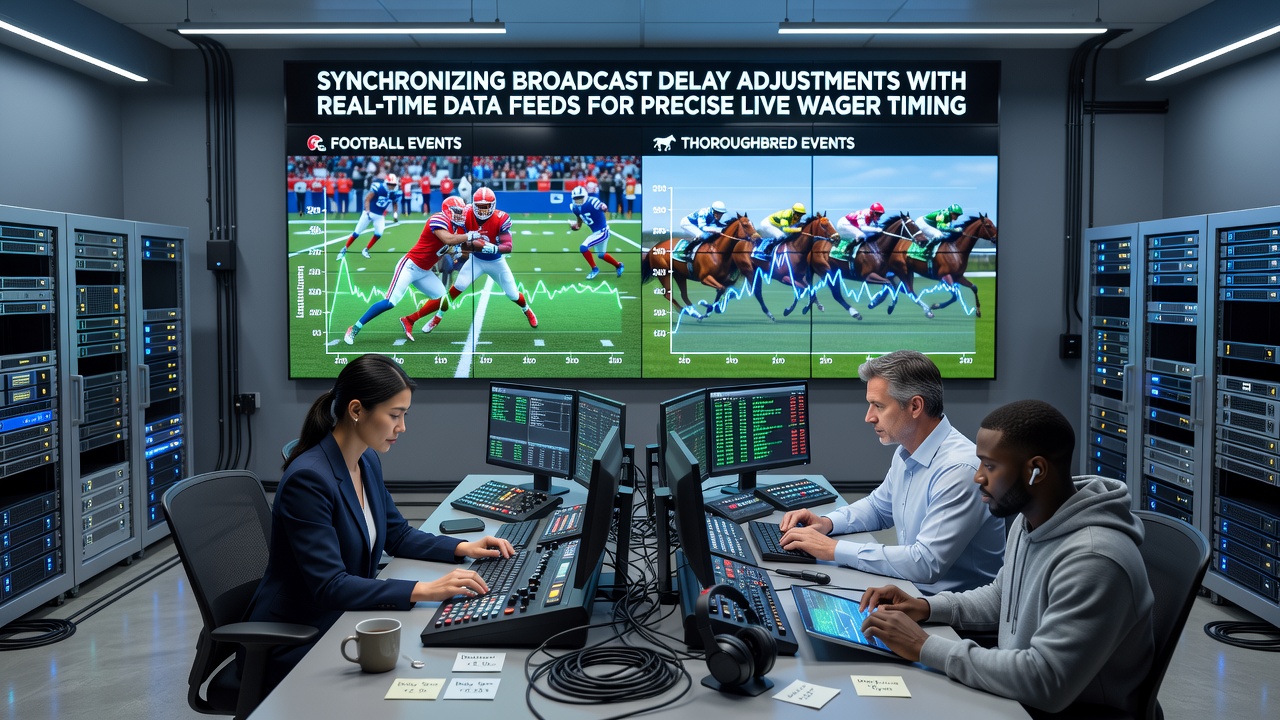
Synchronizing Broadcast Delay Adjustments with Real-Time Data Feeds for Precise Live Wager Timing in Football and Thoroughbred Events
Live sports broadcasting introduces measurable delays that range from several seconds to over a minute depending on transmission methods, and these intervals affect how bettors interact with real-time data feeds during football matches and thoroughbred races. Operators adjust for these gaps by aligning video streams with instantaneous statistics from tracking systems, which allows wagers to settle at the exact moment events occur rather than when images reach viewers. Research from the Federal Communications Commission on broadcast latency shows that satellite and cable pathways create consistent offsets that data providers must compensate for through timestamp synchronization protocols.
Understanding Broadcast Delays in Live Coverage
Football matches and thoroughbred events rely on camera feeds that travel through multiple processing stages before reaching audiences, and each stage adds latency that disrupts precise timing for live bets. Data feeds from player tracking devices or equine sensors update every fraction of a second, yet the visual confirmation arrives later, which creates mismatches unless systems recalibrate the two streams continuously. Observers note that production crews insert brief buffers to allow for graphics overlays and replays, and these additions compound the overall delay that reaches home screens or mobile devices.
Real-Time Data Integration Techniques
Companies deploy application programming interfaces that pull position data, speed metrics, and event triggers directly from stadium sensors or racecourse timing equipment, then they match these inputs against adjusted broadcast clocks. In football scenarios, goal-line technology registers ball crossings milliseconds after they happen while the television image trails behind, so synchronization software shifts the data timestamp forward to align with the visual record. Thoroughbred races use similar methods where RFID chips on horses transmit location updates that operators cross-reference with finish-line cameras to verify exact placement for in-play markets.
Engineers apply network time protocol standards across servers to maintain consistency between feed sources, and this approach reduces discrepancies that otherwise lead to settlement disputes. When a goal occurs in the 67th minute of a match, the system logs the precise second from the data stream and waits for the broadcast to catch up before confirming the wager outcome. August 2026 saw several European leagues adopt enhanced 5G backhaul connections that cut average delays by 12 percent according to industry reports, which improved accuracy for live betting platforms handling high-volume football and racing action.
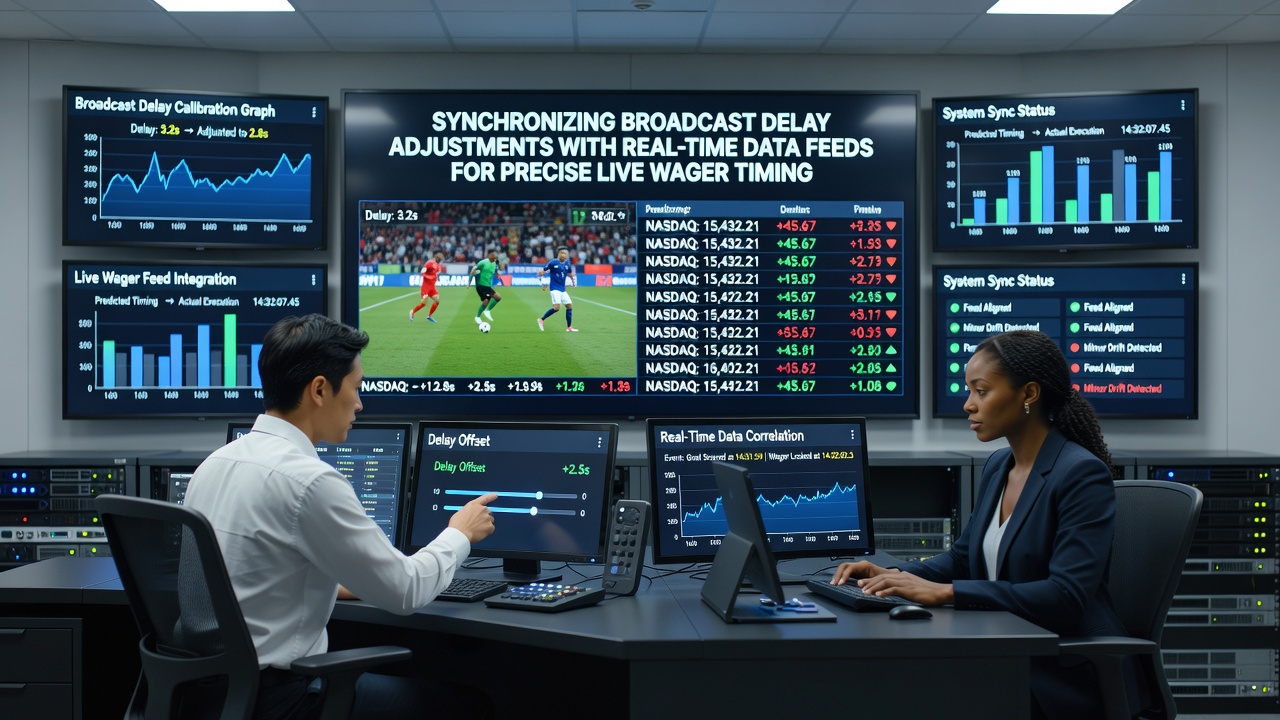
Application in Football Markets
Football live wagers on corners, cards, and player performance draw from optical tracking systems that feed coordinates into betting engines every 40 milliseconds, yet viewers see the action with an average 35-second lag on traditional broadcasts. Synchronization tools shift the data arrival window so that a corner kick registers at the moment it happens on the pitch instead of when the television feed displays it. This method supports accumulator bets where multiple timed events must align within narrow windows to produce winning outcomes.
Application in Thoroughbred Racing
Thoroughbred events present shorter windows for decisions because races last between one and three minutes, and position changes happen rapidly along the final straight. Data feeds from GPS-enabled saddles provide speed and distance measurements that operators synchronize with broadcast frames to determine photo-finish calls or in-running place markets. Handlers at tracks in Australia and North America have integrated these protocols since 2024, which allows platforms to adjust odds dynamically as horses approach the final furlong while accounting for the visual delay.
Technical Challenges and Solutions
Variable network conditions introduce jitter that can offset synchronization by several frames, and teams counter this through redundant clock sources plus predictive buffering algorithms. When heavy weather affects satellite uplinks during outdoor football fixtures or turf races, the system falls back on terrestrial fiber connections that maintain tighter timing tolerances. Those who manage these platforms test the full chain regularly to ensure that a late goal or a surge by a leading horse triggers the correct wager resolution without manual intervention.
Standards bodies including the Australian Communications and Media Authority have published guidelines on live event data accuracy that emphasize timestamp verification across all distribution channels. These recommendations encourage operators to log both the raw data event and the corresponding broadcast frame for audit purposes, which supports regulatory reviews of settlement fairness in high-stakes markets.
Future Developments Expected by 2026
By August 2026, emerging protocols that embed timing metadata directly into video streams promise to reduce manual adjustments, and early trials in major football leagues demonstrate sub-second alignment between data and visuals. Thoroughbred racing organizations explore similar upgrades that would allow bettors to place wagers based on sensor readings with confidence that the broadcast will confirm the outcome at the same recorded instant. Integration with edge computing nodes located near venues further shortens processing paths, which keeps delays predictable even during peak viewing periods.
Conclusion
Synchronization of broadcast delays with real-time data feeds creates the foundation for accurate live wager timing across football and thoroughbred events by matching instantaneous statistics to visual records through calibrated timestamps and network protocols. Continued refinement of these systems supports expanding markets while maintaining the precision required for fair outcomes.