Tracing Referee Bias Indicators Through Disciplinary Records in Soccer Leagues and Their Counterparts in Racing Steward Inquiries for Informed Market Entries
Klara Baumann · Jul 30, 2026
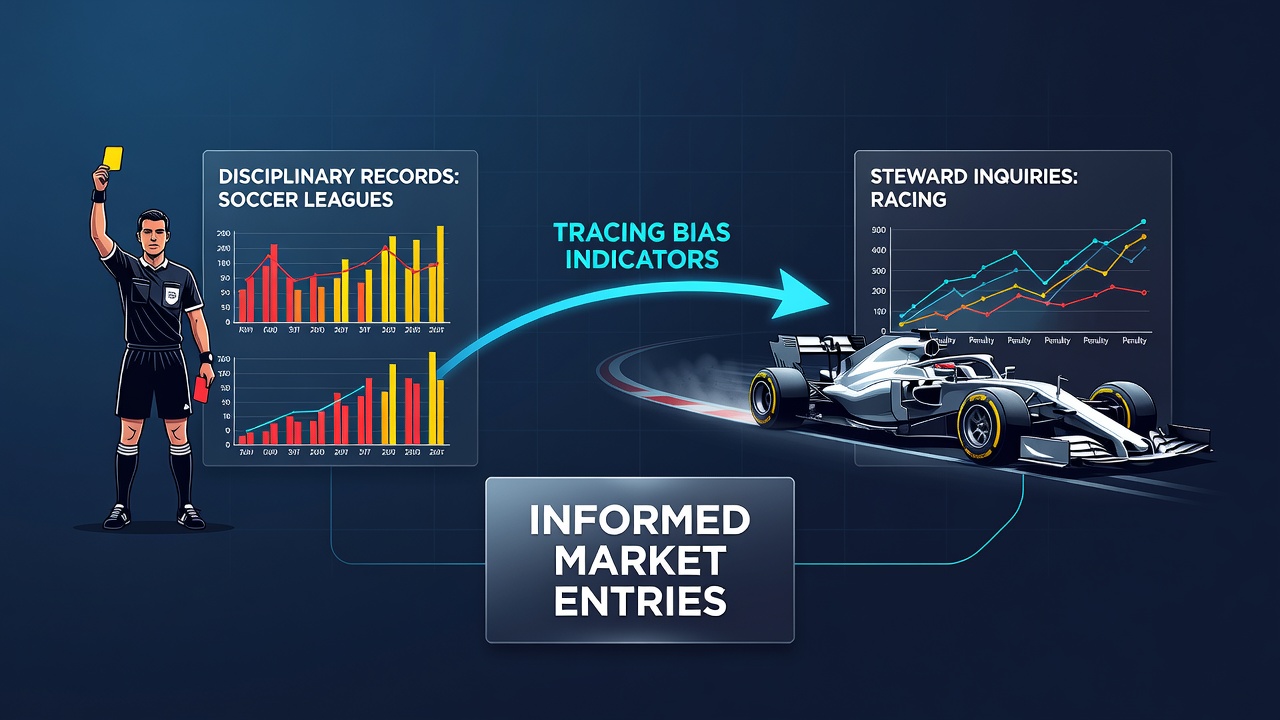
Tracing Referee Bias Indicators Through Disciplinary Records in Soccer Leagues and Their Counterparts in Racing Steward Inquiries for Informed Market Entries
Analysts track patterns in yellow cards, red cards, and penalty awards across major soccer leagues to identify potential referee tendencies that influence game outcomes and betting lines, while parallel reviews of steward inquiries in horse racing examine interference calls and disqualification rates for similar market signals. These records accumulate season after season and create datasets that statistical models use to flag deviations from league averages, such as certain officials issuing cards at rates 15 to 20 percent above the mean in home fixtures.
Soccer Disciplinary Data as a Bias Indicator
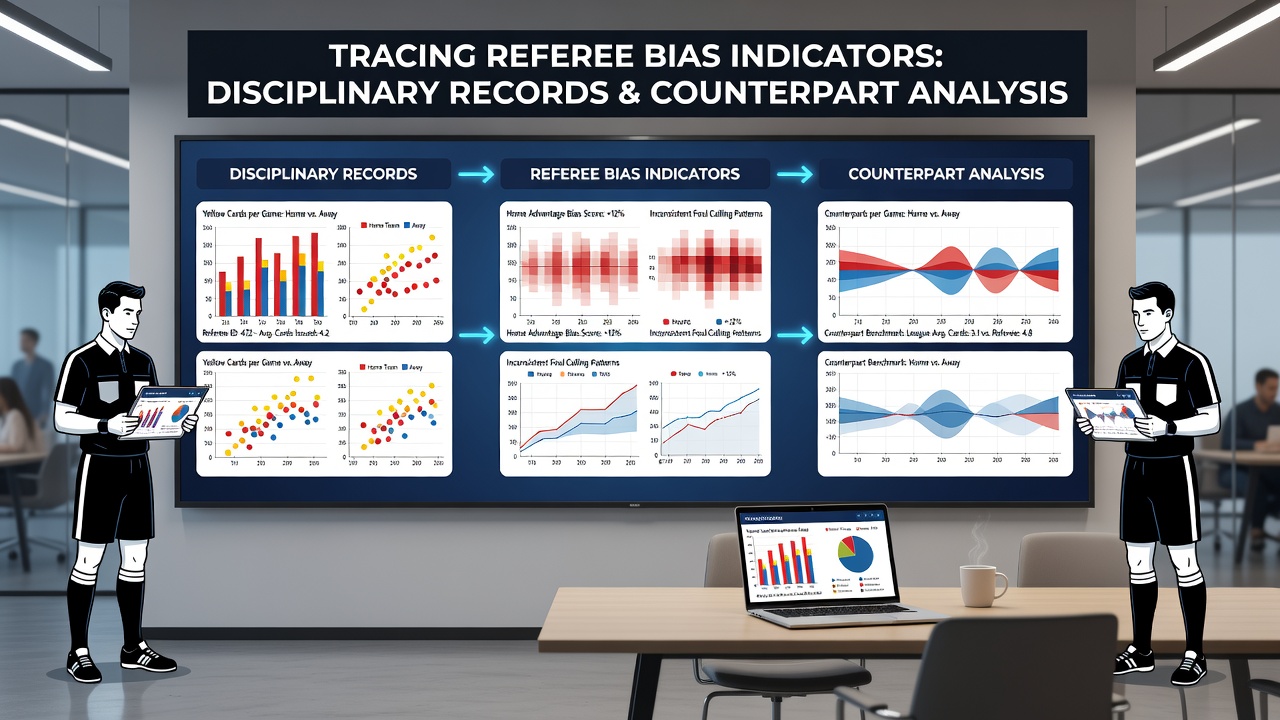
League administrators publish annual reports that break down cards and penalties by referee, venue, and team, allowing researchers to calculate expected versus observed frequencies. In the 2025 season, for instance, data compiled by the European Club Association showed several officials awarding 12 percent more penalties to home sides than the five-year average, a pattern that betting exchanges incorporated into adjusted odds for underdog selections. Teams facing these referees in away matches often saw line movements of 0.25 to 0.5 goals once the assignment became public, because market participants adjusted probabilities based on historical card distributions rather than team form alone.
Researchers cross-reference these figures with match context variables such as scoreline at the time of the decision and player position on the pitch. One study released by the University of Groningen in 2024 examined 8,400 matches across five leagues and found that referees with elevated home-card ratios tended to issue late cautions in matches where the score margin exceeded two goals, a timing that rarely alters the result yet shifts expected stoppage time and therefore live betting thresholds. Market operators now monitor these officials through internal dashboards that update after each round, feeding the information into pre-match pricing engines.
Steward Inquiries in Horse Racing as Parallel Records
Racing authorities maintain inquiry logs that detail objections, interference findings, and jockey suspensions, creating a comparable statistical trail. In Australia the Racing Australia integrity unit released 2025 figures showing that certain stewards upheld 28 percent more objections in metropolitan meetings than in provincial ones, a split that correlates with field size and race distance. Bettors who incorporate these rates into place and quinella calculations adjust their models before nominations close, because the probability of a demotion changes the expected payout matrix for multi-leg bets.
North American tracks publish steward rulings through the Jockey Club database, which lists video review outcomes and penalty lengths. Analysts note that stewards at tracks with larger average field sizes sustain a higher rate of place-getter demotions, a factor that directly affects exacta and trifecta pricing. In July 2026 several major tracks implemented automated flagging systems that alert operators when an individual steward's recent rulings deviate more than one standard deviation from their career baseline, enabling rapid incorporation into overnight odds.
Integrating Both Datasets for Market Entries
Professional syndicates combine soccer card distributions with racing inquiry statistics inside unified algorithms that treat each official or steward as a distinct variable. The process begins with normalization: soccer card rates per 90 minutes convert to z-scores, while racing demotion percentages standardize against race class. Once normalized, the variables enter regression models that output probability adjustments for specific bet types such as Asian handicap lines or first-four finishes.
Market entry timing relies on the public release schedule of these records. Soccer referee appointments typically appear 48 hours before kickoff, while racing steward panels publish 24 hours ahead of the first race. Traders who maintain live feeds of these announcements execute positions within minutes of disclosure, because the information moves prices before recreational bettors react. Data from the Hong Kong Jockey Club's 2025 integrity report demonstrated that markets incorporating steward history adjusted exotic pool totals by 4 to 7 percent within the first hour after publication.
Limitations and Data Quality Considerations
Both domains face challenges with sample size and contextual variables. Soccer referees officiate only 20 to 30 matches per season in top divisions, which limits statistical power, while racing stewards may oversee hundreds of inquiries yet operate under different rules per jurisdiction. Analysts therefore apply hierarchical Bayesian models that borrow strength across similar officials, reducing variance in estimates. External audits by bodies such as the Canadian Pari-Mutuel Agency periodically validate these models against actual payout distributions, confirming that bias-adjusted probabilities improve calibration over raw form metrics.
Conclusion
Disciplinary records in soccer and inquiry logs in racing supply measurable indicators that pricing teams translate into market adjustments. When analysts apply consistent statistical treatment across both sports, the resulting edges appear in narrower spreads for certain officials and stewards, while wider margins persist for those whose records show no consistent deviation. The flow of information from governing bodies to betting platforms continues to tighten as automated tracking systems become standard across jurisdictions.